
Family caregiving can strengthen bonds between relatives, but it can also create unexpected tension and strain. The key to preserving healthy relationships lies in open communication, shared responsibility, and recognizing everyone processes caregiving challenges differently.
Set Clear Expectations and Boundaries
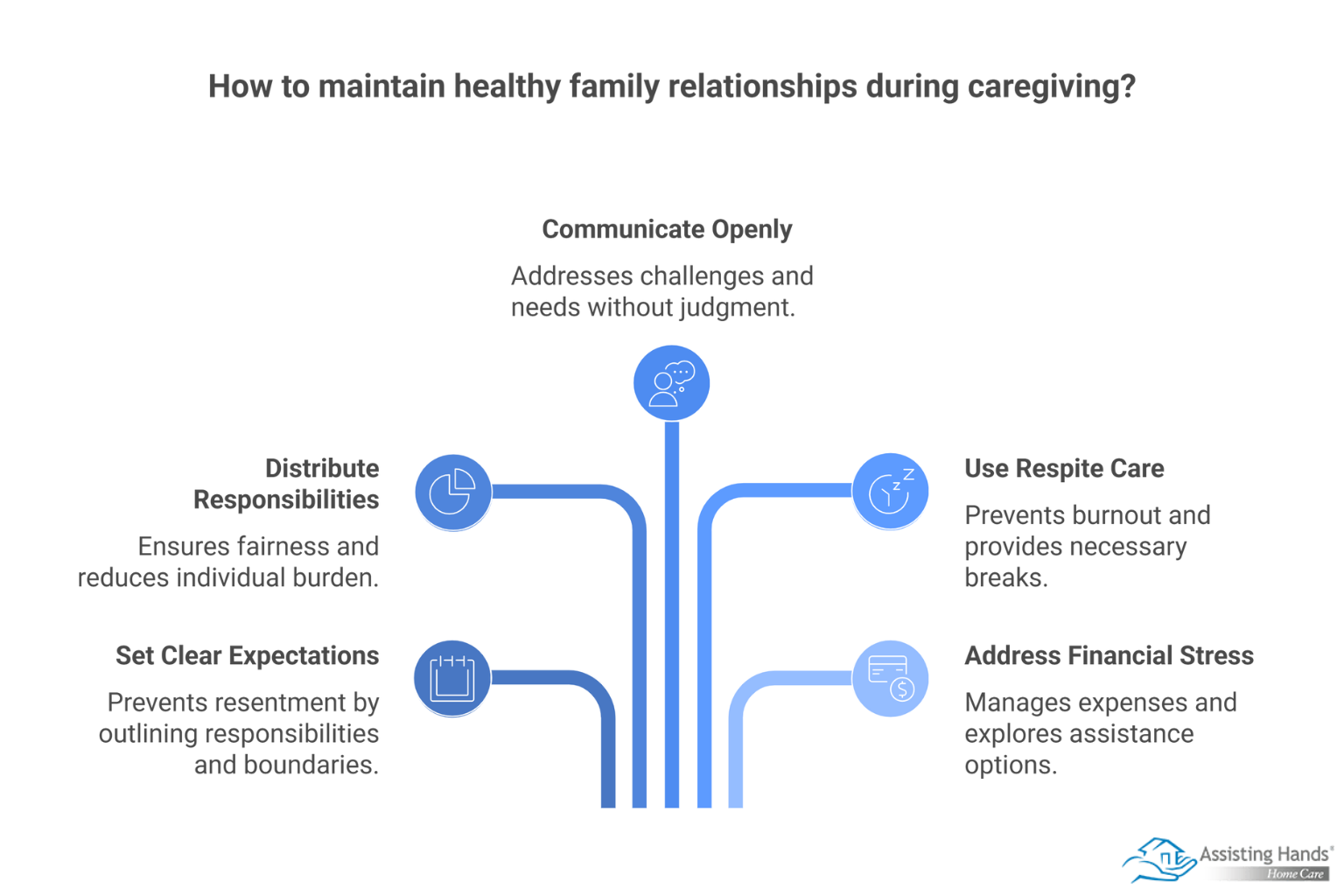
Establishing realistic expectations prevents resentment from building among family members. Hold regular family meetings to discuss caregiving responsibilities, financial contributions, and time commitments. Create a written plan that outlines who handles specific tasks, from medical appointments to grocery shopping.
Setting boundaries protects both caregivers and family relationships. This might mean:
- Designating specific days for caregiving duties
- Agreeing on response times for non-emergency situations
- Establishing quiet hours when the caregiver is unavailable
- Creating backup plans when primary caregivers need breaks
Remember that boundaries aren’t selfish—they’re necessary for sustainable caregiving that doesn’t destroy family harmony.
One of the most challenging tasks of helping an elderly relative age in place safely and comfortably is researching agencies that provide elderly home care. Turn to Assisting Hands Home Care for reliable, high-quality in-home care for aging adults. We offer 24-hour care for seniors who require extensive assistance, and we also offer respite care for family caregivers who need a break from their caregiving duties.
Distribute Caregiving Responsibilities Fairly
Avoid the common pitfall where one family member shoulders the entire caregiving burden. Even relatives who live far away can contribute meaningfully to care coordination and support.
Consider these ways to share responsibilities:
- Rotate weekly or monthly caregiving schedules.
- Assign tasks based on individual strengths and availability.
- Have distant family members handle insurance claims and medical billing.
- Designate someone to research community resources and financial assistance programs.
- Create a system for regular check-ins and updates.
Financial contributions matter just as much as hands-on care. Family members who cannot provide direct assistance might help with covering expenses for respite care, transportation, or medical equipment.
Communicate Openly about Challenges and Needs
Honest communication prevents small frustrations from becoming major family conflicts. Schedule regular check-ins where everyone can express concerns, share updates, and discuss changing needs without judgment.
Create safe spaces for difficult conversations about topics like:
- Financial strain and expense sharing
- Disagreements about care decisions
- Emotional exhaustion and burnout
- End-of-life planning and preferences
- Future care arrangements
Use “I” statements when discussing problems, focusing on specific behaviors rather than making personal attacks. Remember that family members may have different comfort levels with medical discussions or hands-on care.
Take Advantage of Respite Care and Support Services
Regular breaks from caregiving duties can prevent burnout and maintain perspective on family relationships. Many communities offer respite care services, and various financial assistance programs can cover these costs.
The National Family Caregiver Support Program provides funding for respite care services through local Area Agencies on Aging. Veterans Administration benefits include respite care for families caring for eligible veterans. Some long-term care insurance policies also cover respite services.
Even informal respite arrangements within the family—like taking turns staying overnight or handling weekend duties—can provide crucial relief for primary caregivers.
Families who find it difficult to care for their aging loved ones without assistance can benefit greatly from professional respite care. Jasper, TN, family caregivers who need a break from their caregiving duties can turn to Assisting Hands Home Care. Our caregivers can encourage your loved one to eat well, exercise regularly, get plenty of mental and social stimulation, and focus on other lifestyle factors that promote longevity.
Address Financial Stress Proactively
Money concerns often create the biggest strain on family relationships during caregiving situations. Address financial issues directly rather than letting resentment build over unequal contributions or mounting expenses.
Research available financial assistance options together as a family:
- Medicaid waiver programs that cover home-based care services
- Tax credits and deductions for caregiving expenses
- Employer-sponsored flexible spending accounts for dependent care
- Community nonprofit resources and emergency assistance funds
Consider consulting with a financial planner who specializes in elder care costs. Some employers offer these services through Employee Assistance Programs, and many Area Agencies on Aging provide free financial counseling for caregiving families.
Families who need help caring for senior loved ones can turn to Assisting Hands Home Care, a leading provider of Jasper home care service. Services available in our customizable care plans include meal prep, mental and social stimulation, assistance with personal hygiene tasks, and much more. Call one of our Care Specialists today to learn about our customized in-home care plans.
